Sunday, 20 January 2013

The Dawn Choir

(
Once, back in the late 70s after a night of insomniac inspiration, I became aware of early bird sounds outside. I had recently acquired a small stereo cassette recording device and decided to record the event. What surprised me then is how startling, varied and loud this daily event can become as it builds to a crescendo. We're not in some safe world of pathetic fallacy here; this is a more purely contingent aural event.

Recently, I was handed a copy of a CD by Andrew Flintham, who is a regular visitor to my book stall. He explained that it is a recording of a dawn chorus made in 1993 at Thompson in Breckland, South Norfolk. It was duly filed in my theoretical 'later' in tray and was kicking around for a few weeks before I finally got round to playing it during a holiday break in Salthouse on the coast. Salthouse itself has become a centre for bird watchers or twitchers, as they're known: those green-clad men and women who dutifully trudge the marshes with their camouflaged and notably phallic telescopes and tripods on a mission to see rare breeds or more common varieties doing their thing. It's an industry on the North Norfolk coast, which is unusually densely populated by all kinds of visiting varieties and the like. Indeed, the RSPB have a bird reserve up at Titchwell, a Visitor Centre at Cley, and there are purpose-built hides dotted around everywhere. But Andrew's recording is not about seeing; it's about listening, listening to the sonic variety, the randomness and cacophony of this daily symphony which mostly goes on unnoticed. I am then not a little reminded of that time back in the 70s and I have to admit to myself that I've only heard the full dawn chorus a handful of times since.

Here's a rare thing then: a 70-minute recording of a dawn chorus, unpolluted by traffic or aircraft noise and practically impossible to recreate. It was recorded by Andrew and his recording engineer, Paddy Shaw, and, apparently, took nine takes to get one without background noise.

"We finally got the recording right by going there the Monday morning of a Bank Holiday, so everyone was sleeping-off the weekend. I sort of hit it lucky, otherwise it probably wouldn't have happened." Thus said Andrew on a BBC interview.

Whatever happened to my own tape recording I cannot say; it probably got lost or recorded over, though there are still boxes of cassettes in the loft that I have promised myself I'll revisit one day.


Incidentally, Norwich's Voice Project are now recruiting for a new community choir project based on bird flight. Following contributions by published poets of new poems on the subject of birds, the result of an appeal by the RSPB for a forthcoming book, several poets' work including that of Andrew Motion, George Szirtes, David Morley and Ruth Padel is to be put to music by commissioned composers. The final result, Ideas of Flight, will be performed at the Norfolk and Norwich Festival.

Here's a link to hear and buy Andrew's CD, Brecklands Dawn Chorus:

http://www.amazon.co.uk/Brecklands-Dawn-Chorus/dp/B001FDBAO6

or here:

http://andrewflintham.co.uk/

If you would like to go along for an introductory session and/or you would like to join The Voice Project choir, here's another link:

http://www.voiceproject.co.uk/
Photo: David Tipling

Monday, 6 December 2010

No Problem


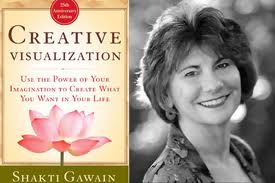
In the 80s an innocuous little book titled Creative Visualization was doing the rounds among my New Age friends. One of its central tenets, as I recall, was the idea of 'positive affirmation', which translated roughly into being positive about your life and any 'goals' you might want to achieve. The process involved regular repetition of phrases such as: 'I am beautiful and powerful and deserve love and happiness' or 'I am growing richer every day in every way'. The important thing about these mantras was the avoidance of the use of negative words and phrases. For example, it would be wrong to express the first phrase thus: 'I am not ugly and powerless and do not deserve to be hated and unhappy'. Well fair enough...

Somehow I resisted this kind of stuff, as I did so much else which was emanating from the increasingly burgeoning industry of self-help. I watched with awe as carpenters became acupuncturists and plumbers became cranio-sacral therapists. Their income levels apparently looked set to increase a few notches and all manner of things were about to become well and weller. Sitting on the sidelines, I observed new settlements of therapy folk arise in towns such as Totnes or Hebden Bridge. These towns boasted more alternative therapists per square mile than... well, where? San Francisco? California appeared to be the originating locus, and, indeed, 'Shakti Gawain', the author of said book, I believe, resided somewhere in that region. 'Shakti' appears to connote the exotic orient; 'Gawain' has something to do with some English ur-Christian/Celtic mythology? (I am thinking of Sir Gawain and the Green Knight)

The standing joke among the few remaining skeptics in my circle was along the lines of wondering who constituted the patients within these therapy-oriented communities. Presumably, they were all working on each other; it was hard to imagine an indigenous population would be either motivated to visit or could afford the whacking fee if they did. I also observed relatively poor sympathisers spending their precious little on a weekly visit to the latest practitioner of 'metamorphic' foot massage or crystal healing.

At the time, I (not always) quietly poured scorn on the whole self-help business and its capitalist momentum. Meanwhile, 'Shakti Gawain' et al grew rich on the profits of their gifts to the world. Shakti herself has gone on to sell 10 million books, according to her website. That's a pretty healthy visualisation...

It is, then, with some humility that I approach a recent phenomenon which has been bugging me. On a recent trip to Tescos, at the checkout, I was confronted with a young woman who seemed entirely oblivious of my presence. I decided to counter this indifference with a pointed 'Thanks very much, goodbye', to which she replied, without any kind of eye contact: 'no problem'. I departed with irritation and found myself remembering this stuff about positive affirmation with not a little irony. A subsequent phone call from my dentist's receptionist which ended up on my part with a 'thanks' and on her part with a 'not a problem' compounded the issue in my mind. I found myself yearning for a more positive response, however phatic, like 'OK, good, see you on the 10th.'. Even 'have a nice day' would have been better. 'No problem' combines two negative words and I wonder when and where it arose as the universal response it has become.

I could end this blog with some kind of rallying call for the return of Shakti, but I wouldn't go that far. Clearly, I am still 'resisting'. Have a nice day!

P.S. My mate Scotter has just reminded me of another aspect of this 'no problem' response. The statement assumes that there was a problem in the first place. Presumably, an ideal customer service should be starting out from some other assumption.

Friday, 5 November 2010

Hard Sell


The phone rang yesterday morning, and the delay before anyone spoke alerted me to an automatic dialling software at the other end. I hung on. 'How are you today, sir?' came a clearly Indian-accented voice. I suppressed the 'who's asking?' response which formulated in my head. I have sympathy for workers in this kind of work; it's clearly a frontline job. I made the right kind of noises and the poor guy, obviously reading from a script, launched into a monologue about how I had been 'chosen' (one of those key words) as a 'priority' member (the key words are mounting up) of the 'British Midland Diamond Club' to be considered eligible for a British Midland credit card. I would automatically receive 20,000 'destination miles' and 6 months interest-free credit which would be applied to any amount outstanding I had on any other cards, so long as I transferred the balance etc. etc.

I had lived in Scotland for a couple of years and had taken the flight between Aberdeen and Norwich a few times. At some point, someone at the airport had offered me 'Diamond Club Membership', which I took up because it didn't appear to be costing anything. I would proceed to gather 'frequent flyer points' and so on. As far as I know, the points still exist in ghostly form somewhere. Otherwise, my exclusive membership translated into a 'hospitality lounge' at Aberdeen airport, where I could sit with the suits in a little room outside of the main crowd and drink free coffee out of polystyrene cups. Once however, in Moscow, I flashed my DCM card and was directed to a capacious lounge with only two other people there, and any amount of buffet food and wine available; this was something of a result.

The hook, for me to consider the credit card and carry on with the call, was the 20,000 'destination miles'; I imagined a few trips to the US and so on. OK, I had to spend £300 in the first 90 days of ownership, but I figured I could handle that. However, a semblance of rational brain remained despite the piggy bank, lottery-winning, free-lunch activity which the spiel, however mechanically delivered, had promoted. 'Hang on, hang on,' I said, breaking in to the monlogue. '20,000 destination miles: is that for real?' The answer was a bit fudged. I persisted: 'how does that translate in actuality? Like, a day trip to an amusement park or what?' The guy was compelled to move off script a bit and was clearly vexed. He read out a few European city names that would qualify for the amount in question. So, 'destination miles' have little or nothing to do with actual miles then, we established. I was reminded of the huge number of 'air miles' I had once collected only to discover that they could be used incrementally towards the cost of the most expensive flights etc.

The monologue moved on and lasted a full eight minutes, with only occasional input from me, as I handed over more and more personal information. I managed, I think, to interrupt the default scenario of my receiving 'offers and promotions from carefully selected third parties' and so on. By the end of the call, I was exhausted. I guess this guy stopped for a drink of water as well. I found myself hoping that, at least, my positive response might have earned him, as worker, a bit extra by way of bonus. And I had maintained, I imagined, the option to go forward with this thing or not. I had agreed an email contract, and it duly arrived a minute after I put the phone down.

This telephone worker was, on this occasion, working for MBNA, who run the majority of brand name credit cards the world over: the figure must run into the thousands. So, the lure for me had been the free flight. I don't have a credit card debt. I have cards that I use but pay off regularly. One of them is handy for foreign payments, because it makes no extra charge for currency exchange, though there's almost certainly hidden charges in there somewhere. I like to think of myself as someone who can handle owning a credit card. Occasionally, I have been late with a payment by a day or two and been penalised accordingly: £12 is the going rate. I imagine a huge number of people use their credit card in this kind of way. However, of course, there are a huge number of people who don't. I have one friend, for example, who uses the 'interest-free' period to shift his ever-increasing borrowing around from card to card. He's proud of his management of this situation. Meanwhile, his debt is increasing. It's a 'huge numbers' game.

An even larger number, maybe the majority, are paying massive, compound interest on their borrowing on credit cards. Someone has to pay the guy in the call centre's wages, the cost of my flight (if it ever materialises - I wonder what the percentage of actual take-up on this is?) and, of course, for the whole edifice which is the banking system. We are in a time of 'recession'; many banks have 'gone under'; some (those that are ideologically monumental within the system) have been 'bailed out by the taxpayer'; ordinary people have seen their pension schemes go down the drain; fingers have been pointed at the very high wages and huge bonuses received by high-end bank employees and directors, and so on. Banks and their erstwhile, ill-advised, laissez-faire lending have been blamed for this present parlous condition of capitalist economics. And yet, the system is still in place and working the same as it ever was. The only way the promotion of credit cards can work is for ordinary people to go into debt and to be servicing a loan that they can never quite surmount. Someone somewhere has done the cynical maths. X number will not go into debt; x number will pay a bit by way of late payments; x number will stumble along paying interest on their borrowing; x number will go into exponential free-fall; x number will take the bankruptcy option. The number of those who struggle to service the loan must be high enough to maintain the enterprise.

My final thought on this call is that it seems incredibly anachronistic. The credit card system and its high interest lending are entirely predicated on milking those who get sucked into debt. The anxious consumer is like Jonathan Harker in the company of the vampire sirens who keep him just alive enough to sustain their feeding habits. How can it be that this high-interest lending has not been outlawed by now? I guess it's a dumb 'elephant-in-the-room' kind of question, but it seems like one that we should be addressing.

Tuesday, 2 November 2010

'Love's not so pure and abstract as they use[d] to say'

An epigraph from Sylvia Plath (Love Letter) stands at the gate of Blandine Longre's aptly named collection of poems, Clarities: 'I knew you at once./ Tree and stone glittered, without shadows'. This defamiliarised moment of clarity, this love epiphany, is suspended like a beacon over Longre's remarkable writing of diverse epiphanic experience. These poems are coming out of the chasm of experiential, momentous exchange - with clarity. But that clarity is not composed of sweetness and light: it's a carnival of grotesques and conflicting impulses, of puissant exchanges and mutilating forays and retreats. We are in the realm of emotional experience. It's a vulnerable world of affirmation, deformation, offering and denial; we all know it: it's what makes us tick.

Blandine Longre has found a language for the push/pull, the gut-wrenching/the ecstatic, the vulnerable/the guarded: the matter of our emotional, energetic composition. Her writing is fueled by a passion and an honesty, that unholy, oxymoronic coupling out of which we attempt to mediate our lives, but normally fail. Longre explores the complex variety and intensity of the 'clarity' experience, not as it exists as a rare, even fetishised, potential event, but as it has frequent bearing on all our significant perceptions. It's a dynamic component of our lives, our deals with ourselves, our mirroring exchanges and our important relationships. It constitutes our sanity and our potential for happiness - and it isn't always pretty. Longre has invited us in to the theatre of terrible reckoning, before Superego intervention closes the gate and the matter is banished to the realm of the repressed.

How to read the other and the self in the eye of the other, John Donne's ecstatic business, is a theme ('the whole discordant symphony of selfhood' [I-soul]. The intimate relationship is the most critical in this respect. Here's the first poem in full:

When the time comes

Put a distant face to your proffered name

- flesh-struck, curse-furrowed, demented (you choose)

Then in the vacant soul's retina,

look at your lone visage and foretell what

your feud of a body could not

(from where its words knelt uprightly so)

Through slaughtered days and strangled dawns

(Jolting nights in between)

no word nor rock for it

- - the fleck of your yes-eye against a no-mouth backdrop

mere distorted painlines.

Blandine Longre has tipped her hat to Donne by way of other epigraphs within this collection. There are buried allusions as well: 'sur-faces now undone as coarsely as they were/ half-donned' (Exhumation). Donne bestowed his own epigraph upon a history of love poetry with his 'John Donne, Anne Donne, undone'.

In When the time comes, Longre steps sure-footedly into the metaphysical tradition. The poem is in the form of a sonnet and contains a conceit. The imperatives, 'put', 'look', throw out the challenge to the bracketed 'you', by way of aside: 'you choose' with its hooting owl vowels. 'Lone visage' (echoing 'distant face') and a similarly echoing ('flesh-struck, curse-furrowed, demented') and characteristically concise image, 'feud of a body', are opposed. 'Its words knelt uprightly so': oh, the pious posturing of expressive intention! 'No word nor rock for it': defying concrete manifestation. As a paradigmatic literary affirmation of self, Joyce's Molly Bloom's 'yes' lingers on. Longre's 'earthy screech of she-raptures' [Expurgation] or 'my yesohyes plea' [Up and down and the reverse] correspond. Here however, the poet identifies the duplicity of 'the fleck of your yes-eye against a no-mouth backdrop' like a Rorschach mask. It's the matter of emotional ambivalence: ('mistaking a noyes for a yesno' [Up and down and the reverse])

When the time comes launches by way of the power of the imperative, heads towards the diminuendo of the past participle in perfect pairings ('slaughtered days', 'strangled dawns'), and shuts down with a bold final framing by way of remarkable condensation: 'mere distorted painlines'. 'Mere' returns 'lone'; 'distorted' returns 'feud of a body'; 'painlines' returns 'curse-furrowed'. The syllogism is complete. As an accolade to Donne, it is pitch-perfect; as a contemporary adaptation of the sonnet form, it has both phenomenal integrity and technical brilliance.

A subsequent poem takes up another theme: the provisional uncertainty or conditionality of the modal auxiliary. Avoiding the blackest eye of might addresses the power of deferred response full on. (Later poems speaks of 'shredded oughts-to-be' (Fatum) or 'the perhaps of a mutability' (Épouvante)). Though this 'might' was never more ambiguous, its more obvious rendering being 'strength' or 'power':

Avoiding the blackest eye of might

-- its overfed despotism a maddening guile

I am a field a realm a route

an expanse of everdark crops

[...]

It works either way. The 'despotism' of the conditional? The 'maddening guile' of the provisional 'might'? The might of 'might'? Certain kinds of imagery set up camp in the realm of the ambiguous. It's obvious to state that there's a resolute irreducibility about the best poetic imagery, which is why it has been written thus in the first place. One can only sit in awe of the effect. Eliot spoke of 'the image of absolute necessity' in his essays on metaphysical poetry. Pound described an image as 'that which presents an intellectual and emotional complex in an instant of time'. HD's early Imagiste poems come to mind: they are elusive in terms of explication and are already impervious to reduction. Some of Laura Riding's experiments are also evoked for me, as in use of the present participle here:

Wreck-born snakes refusing to embrace

their wet down (never was a river redder)

crisscrossing their anathema

begging for parched soil and dryscape

(the perhaps of a mutability)

[...]

(Épouvante)

The uniqueness that is Blandine Longre's in this collection of poems is twofold, in my opinion. Firstly, she has identified a domain: the all-powerful operation of the instincts and vicissitudes, their processes, their drives and their vital interactions. Secondly, she has found a language and a form: a vehicle for their expression. It involves neologism, courageous experiment and a fierce intelligence to maintain such sustained control over the material. There is an immanence of the object in her writing which is entirely compelling.

Blandine Longre invites us to share an intensity of seeing, comprehending, reading the other and beyond: responding to the judgment call and interpreting the momentous subtlety of the moment. She has constituted an art of the matter of seeing: seeing in a most intimate and shockingly dynamic way. The irreducible integrity of the image that Pound once envisaged is herein extant. Clarities is an astonishing debut. Blandine Longre has unleashed a new, vital, metaphysical animal upon an unsuspecting public. Be warned!


Purchase your copy here: http://blackheraldpress.wordpress.com/

Wednesday, 27 October 2010

Let's Get Visceral...


I am in receipt of two volumes of poetry from the newly formed Black Herald Press. Blandine Longre and Paul Stubbs have taken the bold step into publishing and have begun by publishing their own recent work. I am yet to read Blandine Longre's Clarities, though I have dipped in and caught something of the flavour and it looks very exciting. (Review to follow)
[Both books are available for purchase here: http://blackheraldpress.wordpress.com/]

I have had a copy of Pauls Stubbs's second published volume, The Icon Maker (Todmorden: Arc Publications, 2008), kicking around for a couple of years now. Occasionally I mislay it and I am troubled until I find it again. I read it at odd hours and have always found it strangely consoling, though 'consoling' is an adjective quite at odds with its visceral content. Stubbs addresses the condition of a world in which God is dead or departed and the religious impulse is atrophied. Flesh and bone remain, of course, in abundance. A review citation from Alice Oswald on the jacket states: 'Stubbs is one of very few living poets whose work I go back to'. I can only concur; partly because of the difficulty of consuming a whole poem in one or two or three bites - there's always more - and partly because of its stark, discomforting originality, so jarringly at odds with a contemporary idiom. As a 'culture consumer', I have got used to bite-sized poetry; there is, after all, so much to read, to listen to, to see. And this is one of the ways in which I think we are all prone to behave; we don't commonly make the effort. But Stubbs has already discerned the 'now logocentric impulse to remove Calvary from [the] mind' (Without Philosophy) and this very impulse is implicitly the foil for the kind of writing he is doing.

Then there's the idiom. 'Calvary'? There are swathes of biblical reference in his writing. It's not fashionable to resurrect the idea of God, particularly a Christian God, or, further, to address a forgotten metaphysical landscape of apparently redundant images - and icons. But again, this is precisely the point; our atrophied sensibility can barely recognise the significance of that landscape:

After the crucifixion I found
that there was very little new
work, so, forced to wait for
the body of the next God to die,
I did this: I went back into my studio,
to create masks [...] (The Icon Maker)

There's also a wry, comic edge. On first reading, one is not alert to this possibility, apart from remarking the occasional parenthetic interventions, but there's an ironic undertone at work here. The juxtaposition of the signifier, 'Calvary', with the matter-of-factness of 'there was very little new/ work' is characteristically bathetic. Then there's the list-making curiosity of: 'I did this: I went back into my studio', which says so much more than the pared down 'I went back into my studio'. This kind of repetition at first appears redundant and runs against the grain of the poetic rule of a Pound or a Frost, 'use no superfluous word'. But Stubbs has created a distinctive idiom. His repeated pronouns, his 'I's and 'it's, at first seem like poetic tics or something approaching the French use of 'c'est'. It is this latter reinforcement which has the force of edict, and I think this is closer to the disturbingly courageous voice which is Stubbs in flight. He is uncompromising and the disparity of idea and matter are characteristically yoked together as in the Donnean, Metaphysical tradition. As a lone, prophetic voice in the wilderness, Stubbs evokes the historical significance of other such voices and testaments and they become of a piece with the kind of writing he is doing.

The new, long poem, Ex Nihilo, is a tour-de-force. Building on the ground of The Icon Maker, here a world of new beginning and becoming is imagined and its logics and incidentals pursued. It's a poem about the act of creation, and the poet's rib is the Adamic starting point for a prolonged meditation on the genesis of art, creativity and poetic consciousness. The 'I' which begins the poem is an 'I' which disintegrates, fragments, as the body becomes a discorporate symbol within a Picassoesque landscape of bone-rib outcrops and Svankmajeran intrinsically motivated, corporeal assemblages. Some of the phraseology is sublime. Here we have a temporary return of 'I':

as I, I milk back my ink
from the first etymological gland
of language,
while checking out each new sensory terminus
for the arrival of what makeshift or barbaric form?

This 'I', (this not 'I'), neatly encapsulates a tradition of dancing with poetic subjectivity, but has the matter of finding a true language been better expressed? 'Milk back my ink/ from the first etymological gland/ of language' is so alliteratively concise. Then there is the matter of form.

[...] Something double-breathed
and superhuman, but not yet me, no, only this,
this breaking free of a fault, of some
yet to-be-encountered sin;
(imagine a terrible but mistaken inhabitant
of your own soul)

This is a radical extension of dédoublement: eery and intensely unsettling. An unwelcome and fearful imagining born out of the naked shudder of the rawness of the new-born soul breaks in and is not readily discarded. The liminal consciousness of the poetic 'I' suspended in its bracketed container has both the force and the near comic innocence of a child conjuring a bogeyman. The potential for 'fault' or 'sin' always lurks, but there is a nascent purity which shimmers with all the intensity of a Blakeian, Manichean vision.

The Derridean/Lacanian/Barthesian philosophical axis, which reconstituted the language/meaning problematic, launched us all into an era of 'playfulness' and has, in some measure, informed quite distinct modes of production. On the one hand it has, partially, relegitimised the ludic world of the performative lyric, a mode already established in the mid twentieth century partly in reaction to T.S. Eliot's dominance (though his homeopathic trace remains); Simon Armitage would be a prime example of this tendency. On another, there is the radically experimental world of such as Scott Thurston and Tom Raworth, in which language is 'liberated' from syntactic chains and relaunched in a paradigmatic dimension. The latter school has some bearing on any explication of Stubbs's linguistic effects, in that his acts of dislocation mess with the syntagmatic apparatus and deliver new layers of meaning, and that meaning may be unbidden, novel, unsettling and affective.

Paul Stubbs's Ex Nihilo is the antidote to a poetry publishing current which appears to admit the most trivial of efforts. Poetry is a broad church and there's no intrinsic harm in accessibility. However, Stubbs is coming from an entirely different place. He's not writing for the reader who is looking for the habitual 'performative' element, though performance there is in every scalpel's incision. The poet as surgeon diving deep for the soul, excavates the flesh, avoids his own anaesthesia and confronts that primeval landscape in an acupunctural ecstasy with only the agony of an already conscient subjectivity echoing the necessity of intervention.

This review reflects an initial immersion in Stubbs's complex poem. I will inevitably return to this book and it will doubtless haunt me as did The Icon Maker. Ex Nihilo is a poem replete with original ideas, perspectives and perceptions. It eschews the 'duplicitous form, its goodbye' in an act of creative becoming. Herein, Paul Stubbs combines the power of the makar with the vision of the savant and manages nothing less than invoking a truly original word event.

Once again, here's a link to Black Herald where you can purchase:

http://blackheraldpress.wordpress.com/


Monday, 10 May 2010

Preserving Culture


Sorry, I haven't
blogged for a while. I have been too busy with other things
...


A recent film based on the life of the Russian poet and Nobel Prizewinner, Joseph Brodsky, [A Room and a Half (2009; directed by Andrey Khrzhanovsky)], depicts the ambivalent relationship of the artist in exile to the land which has expelled him. The matter is refracted through the lens of memory and coloured by the desire to return to Leningrad (St. Petersburg), the fabulous site of a childhood spent with devoted and indulgent parents. Less concerned with the facts of a life than the incidents and incidentals which compose memory and which produced a poetry of paradox and metaphysical speculation, the film dwells lovingly on the many rich details which constituted the artist's home amidst the austerity of a diet based on the potato and the queue for the bathroom in a shared housing project.


One of the recurring incidental details of the film is the mother's gentle insistence that the young Brodsky drink his daily dose of fungal water. I recall that she describes it in the film as all that remains of a very old and rare fungus, and we can see what appears to be the remnant of a large mushroom in the murky liquid of the jar. This may or may not be intended to be one and the same as the fungal culture based on tea, 'kombucha' (grib - гриб), which, like the still very popular 'kvass' (квас), a fizzy drink based on stale rye bread and sold everywhere alongside Coca Cola and Fanta, is an enduring feature of Russian life. This microbiological culture of uncertain and ancient origin. with its enigmatic health-giving properties, is the perfect symbol and embodiment of culture itself and corresponds to the health of the tribe as it is preserved and handed down from generation to generation.

In Russia, the kombucha culture also connects with the idea of peasant life. The ideal of peasant life, as erected by the Soviet ideological apparatus, developed the harsh and venerable life of the peasant to the heights of an agrarian utopianism which would include the life of the dacha, the necessity of the harvest, the elemental constitution of cooking with fire and shitting in a wooden shed. The sheaf-bearing women and scythe-bearing men, always of sturdy stock, a stock image indeed, within socialist reailst art, resonate with ideas of abundance, health and vigour, and mastery of the land; they also remind of the essential connectedness with the conditions of nature and the beasts of the earth. Such images were an essential and established component of a mnemonic landscape standing alongside the bare-chested blacksmith or the soldier bearing arms.


Kombucha has its place now within the global health industry. It looks like crap, a kind of distilled ectoplasm, and possibly tastes like crap, thus appealing to the myth that the most effective medicines are the worst-tasting ones. It is also exotic and of uncertain origin, though significantly and indisputably organic; it thus has the mythic provenance of a perfect original organism: a kind of food from the amniotic swamp from which life itself originated. Meanwhile the jar on the shelf in the kitchen is like a large test tube or container for a self-contained chemical experiment. Like those jars of pickled foetuses or preserved body parts, it has, by analogy, a special mythos and topos, not least as burlesque apparition. In this ambiguous form, as 'scientific' phenomenon and ghoulish spectacle, the preserve jar has been exploited by artists and film-makers, not least Jan Svankmajer, to evoke the provisionality and absurdity of a corporeal condition, the conduct of science and, further, the concept and matter of preservation itself.

Tuesday, 10 November 2009

November 9th. 1989: Where were you?


Yesterday, twenty years ago, demolition of the Berlin Wall began with sledge-hammers and enthusiasm. By evening and throughout the night, thousands of people were pouring through in either direction amidst a spontaneous party atmosphere.

I had just arrived in Istanbul following an overland drive in an old Mercedes. The car was part of a trade for kilim carpets. I was the main driver accompanied by the Camden Market trader and her daughter, the co-driver. Pat, a rug dealer, had a history of swimming against various tides and had managed to establish a women's cooperative in southern Turkey for the production of carpets made on hand looms in the way they had been for thousands of years. The Mercedes was a negotiated carrot to mollify the egos of businessmen minders who continued to maintain organisation of all financial transactions.

We had left London 6 days earlier, arriving in Ljubljana early evening of the second day, having spent the first night staying with friends in southern Germany. Ljubljana was a beautifully preserved city with more obvious art nouveau architecture than in any other European city I had seen. In the morning, we wandered through the eery, cold dampness of practically deserted streets and happened upon a market. Here, coated, hatted, scarved and booted, women were selling mushrooms and fungi, and cabbages, exclusively of the hard, white variety, whole or shredded. Apart from this array of diverse fungi, edible and medicinal, and the hills of stacked cabbage or polythene sacks of shredded, nothing else was on offer. It was impossible not to imagine that this annual trade had a similar antiquity to that of the Turkish carpet weavers.

As we proceeded through the former Yugoslavia, it became clearer that this was a nation in which inflation had gone mad. The thousands of dinar that we handed over for a loaf of bread or a bottle of brandy amounted to pennies for us. We had been down and out in Stuttgart, but our status as rich Westerners rose the further east we travelled during these latter days of the USSR. The Mercedes became a symbol of our ostentatious wealth to wide-eyed, country dwellers, though the left-hand drive, twelve-year old car had cost only a few hundred pounds in London.
Arriving in Beograd, we had grown accustomed to perceiving an expression of pinched austerity among the people which was echoed in the run-down, unimpressive architecture of the city. We were surprised however to witness the incongruous spectacle of a McDonald's fast-food joint, ostentatious and oasis-like in this desert of predominantly post-war, poured-concrete building. Beograd also surprised with its underground cellar night-life, home to various eating and drinking dens, exuberant but bad pop bands and late-night, apparently spontaneous, brandy-fuelled, unison singing.

However, none of the stoic down-troddenness of Yugoslavia prepared us for Sofia. Entering Sofia was like entering a Hollywood film set of a European, pre-war, German city. The dimly lit streets, the trams and the attended car parks manned by leather-clad heavies with German Shepherd dogs added up to a heady brew of travellers' terror and hang-on-to-your-wallet suspicion. The heavily made-up women, exposing stockinged legs in deference to the cold in the vacant lots established as wire-fenced parking areas, barely a spit away from the main drag, distinguished by the popping two-stroke engine of an occasional Trabant, added exoticism to the spectacle. It also did nothing to alleviate the all-senses-firing, adrenaline-fuelled, self-conscious anxiety which is peculiar to the outsider who realises he stands out so obviously like the white Mercedes he is driving or the McDonalds in Beograd.

Having done some dollar deal with the guardians of our car, we marched along to the 'Intourist' office in order to be allocated rooms somewhere for the night. En route we couldn't help but notice that the cars parked in the street had no windscreen wipers. We later discovered by way of a German-speaking taxi driver that they had been removed by their owners to avoid their inevitable theft.

I can still hear the high-pitched, nasal English of the Intourist girl with the beehive hair as she issued our documents for the hotel and coupons for dinner and breakfast; it was eerily affective and reminded me of Marla, the Venusian 'Space Patrol' puppet. However, the exotic parking lot, the missing windscreen wipers and Marla's accent were only the prequel to an increasingly bizarre evening involving a space pod cafe, the hottest spot in town according to the taxi driver we commissioned for our outing, and a waiter wearing a black waistcoat, bow-tie and a white shirt which appeared not to have been washed for several weeks. Here, amidst potted plants and piped Beatles covers, sat on 60s formica chairs, we sipped vodka cocktails and looked out over the dimly lit town with not a little bemusement at our present fate. However many dollars we exchanged for 'lev', the local currency, I cannot recall, but it was practically impossible to spend them. There may have been some underground happening going on somewhere but we weren't going to find it.

The next morning we were given directions to a restaurant where we could exchange our coupons and queue alongside many other workers of various kinds for warm goulash and beer. Plastic, pint pots of beer were arranged around a pump like cups of tea in an English cafeteria. We sat with our food, a clear soup with floating, fatty mutton lumps, and tried to look willing. It was like one of those school dinners at which 'Miss' sits at the end and you have to pretend to eat the grey mush, but there is a limit as to what your knife and fork will physically cover when it is time to pass your plate.

A walk in the central street was hard to comprehend. There was a quiet grandeur about the mostly baroque buildings and we had grown accustomed to the lack of traffic, but where were the neon signs, the logos, the paraphernalia of consumer life? Then we looked more closely within the buildings we were walking by. There were large windows, which should have been a clue; however, all that was on display was a pitiful assembly of disparate objects. A toy shop, I recall, had a large proscenium arch of a window but contained only selection of wooden building blocks as centre stage with some rag dolls stages left and right. This seemed at once comic and poignant. The most powerful feeling, however, which emerged slowly and surely, was centred around our own expectation of what we assumed a city should look like; of how we had become conditioned to a kind of abundance which wasn't in existence here. The contrast was stark and profound.

It was not without a sense of relief, however, when we finally negotiated the tumultuous, free-for-all traffic and crazy shopping zone, with shops and stalls and food in sight everywhere, which was Istanbul. Istanbul manifested all the brashness and immodesty of West Berlin as it had once appeared to me after a day in East Berlin on the Friedrichstrasse run in 1982.

We found a hotel, somewhere near the Blue Mosque, washed up and prepared ourselves for a blow-out. An hour later we stepped down to the foyer with no particular plan, only to meet the very same two guys from Izmir who were taking delivery of the car. How? What? The questions were somehow framed and lost as we poured into a taxi and headed to a fish restaurant with dancing. Neither Ahmed nor Murat spoke English and we had little or no Turkish. Fortunately, Murat had lived in Germany and spoke some of the language. This was not the first, nor the last, time my low-grade A-level German came in useful. He explained that the Berlin Wall was coming down that very day. This was very exciting and significant for us, and cause for celebration. After the spectacle of the gyrating abdomen of the impossibly supple dancer, we hit the floor and were instructed how to dance Turkish-style. When we sat down again and drank more wine, I recalled a word from school: Lebensgefühl. Our German-speaking Turkish friend translated for Ahmed, and we all drank a toast to 'Lebensgefühl'. It seemed very meaningful at the time.

It's difficult to comment, without portfolio, on the whole matter of the disintegration of the former USSR. 'The Wall' had been not only a physical barrier, separating and impounding, it had been a symbolic one as well. There was, and remains, ambiguity in terms of gains and losses, but the initial exuberance was founded in the fact that the people had emerged from under an overarching politics. This would not have happened in the way it did without preparatory, political activity, but the enduring idea is one of liberation; not just a liberation from an oppressive regime, but a liberation, both physically and symbolically, by the people, from a political structure. There is a paradox here, clearly, which the idea of democracy has somehow always to exceed.


Monday, 2 November 2009

Pete Townshend: The kids were alright


Music


Pete Townshend came into my sights this week by way of his appearance on Radio 4 (Baroque and Roll: Townshend on Purcell, 27/10/09) in which he discussed the influence of Purcell on his music. Such talk was notably absent from the 2007 film, Amazing Journey, a biopic of the band which I viewed on Sunday, though Townshend's penchant for an erudition teetering dangerously on the edge of pretension ('John [Entwhistle] and Keith [Moon] were geniuses and I was verging on it') was consistent. Amazing Journey plots the colourful history of The Who from their foundation as The Detroits and The High Numbers through to an elder statesman-style reconciliation, (between Roger Daltrey and Townshend, the only two extant members of the original band), which included a species of demythifying, faux candid profanity, that we might expect. According to the film, Daltrey supported Townshend throughout his trial by the media following his arrest for allegedly viewing child pornography. Clearly Townshend's appearance on Radio 4 heralds a prodigal return to respectability; his time spent as a media untouchable has been duly served.

The documented history of The Who would be a good choice for a time capsule information pack and a future needing to comprehend the course of popular music from the early 1960s to the late 1970s.
As The High Numbers playing Detroit soul to an Ivy League-
emulating audience of young Mods, the group looked, sounded and felt as exciting as the phenomenon of small club/pop group/dancing audience ever gets. The astonishingly clear and well-edited footage of a performance at The Railway Hotel, Wealdstone in 1964, captured by Chris Stamp and Kit Lambert, who subsequently managed the band as The Who, is here:
The Who's first single, 'I Can't Explain', [http://www.youtube.com/watch?v=1uFcPjILC7k ] was one of the best pop singles ever created, in my opinion, and a fine example of Townshend's perfectly tuned, introverted lyrics: 'Can't explain/ I think it's love/
Try to say it to you/ When I feel blue'. The fumbling, introspective, lovers' melancholy of the fledgling, adult male was never better expressed. Couple that with the staccato chop of dampened guitar chord and the enfant terrible expressiveness of Moon's drumming and you have the best of early '60s guitar band vitality bubble-wrapped. Further, there's the beautifully concise guitar solo with the unmistakeable Rickenbacker's (12-string?) harmonic overtones in the middle.The Who were, arguably, always more exciting, energetic and expressive of a generation's disengagement from establishment values than The Beatles, or even The Rolling Stones - and certainly The Kinks, though 'You Really Got Me' has a similar energy, musically.

'My Generation' became an anthem of youth culture's imagined disjuncture with all that had gone before. Daltrey's stuttered, rhetorical question, a thinly disguised expletive, 'Why don't you all f-f-fade away?', spat out amphetamine-fuelled contempt. Townshend's windmill, power-chord guitar playing, Entwhistle's high-held, top-end tone, lead-style bass and Moon's overhand, explosive engagement are perfectly married in an expression of magnificent malcontent. A pent-up anger about the 'values' espoused by parents and rammed down the throats of their young is finally and succinctly exporated. This song gave a name for the first time to a shared desire to break free from a miasma of greyness, austerity and deference to the travails of Second World War survivors; it also provided the momentum for anti-heroic reinvention.

Townshend explains in the film that an atmosphere of silence about 'the war' prevailed during his youth in the late '40s and early '50s in which all discussion on the topic was taboo. Yet the consequences of the war and the ideological imperatives of post-war rebuilding were all too apparent. It was down to this 'generation' and their technological inheritance to create a bright, new future on the back of the effort of the wireless generation, those conscripts to armies and factories. A potent emotional ambivalence, a mixture of instinctive love (I can't explain) and implicit resentment (I can't explain) for the privileges of a youth who would inherit an earth unbound by austerity and servile duty thus informed the necessarily inexplicable, regenerative atmosphere of the 1950s. Like Beckett's 'accursed progenitors' , a shell-shocked legion of parents had given birth to a gaggle of emergent aliens like Midwich Cuckoos in the nest. A generation 'gap' had arisen by way of a baby-boom birthing cauldron, an amniotic soup of complex expectation and ineluctable struggle.

The Mods were in self-styled opposition to a blanket of conformity and the projects of fathers and mothers who had inexplicably suffered in ways that were necessarily acknowledged at the same time as they were guiltily resented. A step on from Osborne's angry, young men,
a working class youth of the '60s exploited both individualism and solidarity by way of technological advance which included Lambrettas and Vespas, Dansettes and 45s, ITV and Ready, Steady, Go. For the budding musician there was Boosey and Hawkes, the Selmer mail-order catalogue and the possibility of a 'Hire Purchase Agreement' or 'HP' as everyone called it. 'Escape' was a keyword and one that became increasingly deployed as explanation in a similarly emergent jargon of pop psychology. The lack of respect for prevailing values and 'standards' existed both within a traditional cycle of supercession and within a new found land of snook-cocking postures of indifference. If the burden was on the kids, the kids weren't having it; 'The kids are alright'. Though the latter song, like 'Substitute', bears witness to a complex renegotiation of identity and gender roles which exceeds the slogan-like mantra of an 'anyway, anyhow, anywhere I choose' sentiment.

The matter of war as backdrop, (reinforced by war comics and TV history programmes), as 'Cold' and deferred, and as it composed the increasingly implacable distance between parents and offspring became a repressed needing return. Battles were displaced and enacted on Brighton beach and other such loci of leisured conformity and promenade. Whilst the Mods adopted fashion and make-up, their counterpart, the Rockers, or Greasers as they were later known, represented a uniform resistance to such gender slippage and coquettry. As depicted in the Franc Roddam-directed film, Quadrophenia (1979), (part-written by Townshend), the Rockers appeared to represent some stuff that was good about an existing culture and worth hanging on to. The scene in which Jimmy Cooper (Phil Daniels) is helped by his erstwhile mate, Kevin (Ray Winstone), to fix his scooter conveys the idea that Rockers and their
hands-on approach to machines and a seemingly less agitated sensitivity to the matter of disinheritance constituted a more moderate relationship with existing values. Kevin's willingness to open a toolbox and help a mate resonates, not unsympathetically, with the ethos of 'Practical Handyman'. The Rocker is symbolically aligned with what is worthy and good about fixing things: repair and sustain. After all, their fathers had ridden and loved motorbikes. Scooters were somehow effeminate and accessorising; they weren't about speed and engineering. Many of the 'ton-up boys', however, became Hell's Angels as the decade wore on, and the Mods evolved into Hippie emulators or 'Freaks'; both sides of the debate came increasingly under the influence of psychedelic drugs.

'Drugs' found a new life in the 60s. At the beginning of the decade there were 'pills' or 'blues', i.e. amphetamines, predominantly the 'slimming pill', dexedrine. Their use and their facility to induce paranoia and increase anxiety are well depicted in Quadrophenia. The desire for escape and its mediation by the press, the pop-psychologising 'escapism', constituted the only available explanations for an increasingly febrile reaction to a perceived politics of constraint. An atmosphere of non-conformism developed into an irrevocable rift with the apparently hypocritical values of an outmoded system by way of the psychedelic drugs, Marijuana and LSD, which were increasingly available as the decade went on. The doors of perception, the gates of heaven and hell, were flung open and, from the perspective of the new explorers of an altered mind, the 'straights' were viewed as the wicked gatekeepers or guardians. 'Far out' was considered desirable and 'out of sight' of 'normal' people or everyone who hadn't yet 'turned on'. The ambiguous territory of sharing a platform of power with an arrière garde politics positioned pop bands in an entirely novel position. The words of politicians were no longer to be trusted following national scandals like the Profumo and Poulson affairs. Meanwhile, the words of pop songs became the messages and anthems of a new aestheticism. The politicians of this new aestheticism were the rock stars; their platforms were the stages at rock concerts.

Late '60s and early '70s footage of The Who performing rock 'opera', Tommy, for example, demonstrates a spectacular transcendence from the solidarity of a shared spikiness to a kind of magical realist spectacle: a big production number. The clothes are bad, particularly Daltrey's Buffalo Bill jacket over a bare chest, and the music had reached a level of frenzied excess in which the guitar-smashing seemed less art-house anarchy, more wanton, token and pointless; even more so than it once did to the uncomprehending bystanders at the small clubs who could only dream of owning a decent Telecaster, let alone smashing it up. 'We won't get fooled again', though an epic aspiration, is undercut by the glitzy cheese of stadium rock. The arrival of punk, as has often been observed, was a necessary palliative: a rootsiness, albeit already partially commodified, of which The Who had been a model. In an interview with Steve Jones of The Sex Pistols in Amazing Journey, Jones describes how he and Paul Cook happened on Pete Townshend in a Camden pub in the late '70s. Apparently Townshend was pissed and asking 'who are you?' incessantly. Unwittingly, he had already handed on the baton.

The Who produced some great music throughout the '60s and '70s and the above seems less than generous in that regard. However, for an index of the evolution of pop music from American influence to home-grown hybrid to psychedelic impro romp to pretentious 'rock', The Who's career is paradigmatic. Then again, there are currents which are unique to the Mod sensibility or to its carnivalesque other as explored in songs like 'Happy Jack' or 'Bell Boy'. Comparable material caricaturing the harmless, because unwitting, emerged by way of The Small Faces and The Kinks. The cue to reconstitute Englishness by way of quasi-nostalgic portraiture perhaps came by way of The Beatles and the urge for a pop act of remembrance. The unlikely amalgam of comic grotesque and psychedelic fuelled the Magical Mystery Tour bus and Sergeant Pepper's Lonely Hearts Club with its parade of benign eccentrics, like so many aunts and uncles in the hinterland of the front-line conflict of parent/child relations.

Townshend was clearly a great writer and the mastermind within The Who, but such a band could not have existed without the phenomenal coincidence of musicians who were drawn to its original, energetic constitution.

So, what of Pete Townshend on the influence of Purcell? Everyone is prone to historic revisionism, but Townshend impressed with his account of hearing Purcell as a young man. It emerged that he commanded a much grander vision of his music and career than I had formerly understood; that he knows how music works and knows how to talk about it. The most telling remark, however, was on the topic of how he had been moved to tears by Purcell's sensibility and rendering of Englishness: its melancholy and its tendency to tragic resolution. The young man who wrote 'the things they do look awful c-c-cold/ I hope I die before I get old' has survived and is possibly still evaluating his own emotional ambivalence to growing up within the context of a post-War Britain which prompted him to wear a Union Jack jacket or sport an RAF insignia on the back of a parka.

Tuesday, 13 October 2009

Four New Faber Poets

The timber-framed, baronial/serf-exploiting splendour of Dragon Hall in King Street, Norwich provided the venue last night for the launch of the Faber 'New Poets' tour. They are four poets of exceptional talent: Jack Underwood, Heather Phillipson, Toby Martinez de la Rivas and Fiona Benson. The event was hosted by the Norwich poetry group, Café Writers' Society, and chaired by Matthew Hollis, Faber's poetry editor, with able support from George Szirtes, who also read from his own work.

Jack Underwood kicked off the event with a welcoming confidence.
Jack graduated at Norwich Art School and went on to study for a PhD at Goldsmiths, where he now works within the Creative Writing programme. He also fronts a rocking, three-piece band, 'Le Tetsuo', who have appeared locally over the years and are much admired. In the poem, 'Your Horse', (a personal favourite), the protagonist has an awkward audience with an ex at which 'horse' manifests itself with embarrassing effects. 'Hannah-loo', the imaginary memoir of a guitarist from the late fifties is also a gem.
'Sam Lynch lent me a gypsy dollar to cut our first record
at the hollow shack off Memoir Street.'
Jack utilises a surrealistic idiom to brilliant effect in capturing the quotidian comedies of errors and manners pivoting on the platonic seesaw of idea and base execution.

Heather Phillipson's writing is well observed stuff. A couple of poems feature her encounters with phenomenology by way of Heidegger. 'German Phenomenology Makes Me Want to Strip and Run through North London' represents the desire for a Dasein other than the effort of reading 'Being and Time'. A later poem enacts a kind of Beckettian applied philosophy to a family scene, at which the matter of analysis begins to teeter on an absurdist, albeit phenomenological, edge.


Toby Martinez de la Rivas's first poem, 'Song', captures the ignominy of a country type,
'too busy' or 'too poor' to properly husband the creatures in his care. It's full of arresting images and Lawrentian in its evocation of scene, while reaching beyond the immediate object: 'draping and inverse, eyeless thing/ over his shoulder with disdain like a soiled boa'. The poet spoke of 'the religious impulse' and there is a visionary quality to his writing which is refreshing and powerful.

Fiona Benson astonished with a lyrical confessional poetry. I had to avert my eyes and listen. Like Toby Martinez de la Rivas's 'Song' , her poems are born out of a harsh, rural condition; not
'emotion recollected in tranquility' this poetry of incidental death and coupling in the grass against a backdrop of 'breeze-block wall'. The poem, 'Lares', has a dead bird 'snagged/ by a halter or skein of fibre or yarn' enacting a mnemonic function, of which the list, reaching out for accuracy and reenactment, suggests a panoply of possible threads, as does the later 'spindle and pin/ and needle and thorn of your hollow bones'. A textual tapestry is woven: 'after the fact of your scavenged heart,/ the stolen tissues of your wings'.

A common denominator of all four poets is their ability to use language to capture the subtle significance of the occasional and incidental. This is a significant strength of good poetry. T. S. Eliot, Faber's erstwhile, illustrious editor, spoke of 'the objective correlative' and, though he was underpinning a theory of impersonal poetry, he was also validating the way in which the world speaks to the potentially creative sensibility.

Monday, 28 September 2009

Acoustic Ladyland


I don't have time to do a full review right now but nevertheless have the urge to mention seeing the excellent four-piece ensemble which is 'Acoustic Ladyland'. I've seen Seb Rochford, the drummer, in a number of incarnations, e.g. supporting Julia Biel in F-IRE Collective and with Joanna MacGregor in her role as conductor of a performance of Moondog material. Somehow I've managed to miss Polar Bear a few times. Rochford is an exceptionally good drummer and fascinating to watch. He makes it all look so effortless as he sits bolt upright behind the kit, big hair and all.


The band's sound is driven by the astonishing, punkish on-beat bass playing of Ruth Goller and they are fronted by Pete Wareham on sax. I do not know the name of the guitarist.

Ruth Goller is amazing. Her slight stature and impish presence are at odds with the big, big sound she makes - sometimes chording, at all times in total unison with Rochford's faultless subtlety.


Here's a link to the 'Skinny Grin' single 'Cuts and Lies':

though the new album, 'Living with a Tiger' has different personnel and is the focus of the present tour. Here's a link to something resembling the current band (minus guitarist) playing the title track. It gives an idea of the power of Ruth Goller's driving bass:


Tuesday, 8 September 2009

Don Van Vliet AKA Captain Beefheart


I just spent an evening cruising YouTube and watching old footage of one of my all-time music heroes, Captain Beefheart. What a great resource! There is some astonishing material there, including a 60 minute documentary (broken down into 10 minute slices) made by John Peel and filmed by Anton Corbijn, which gives a good snapshot of his life and work. (http://www.youtube.com/watch?v=4M5YE_a4B1U)

Don Van Vliet never went to school. His parents left him to his own devices: mainly sculpting in his bedroom. At 13, he was offered a chance to go and study the art in Europe (more detail on the Letterman interviews), but his parents swiftly took off to the Mojave desert, so that put paid to that and I am left speculating on their motives. No doubt it is detailed somewhere.

In the Peel documentary, Frank Zappa describes how, as teenagers, he and Don hung out listening
to Blues and R&B records most days. A leap forward takes us to the time of the band's first recording and clashes between the respective missions of Beefheart and the record producers. Ry Cooder, who was drafted in to 'rationalise' the first album, 'Safe as Milk', takes up the story, describing Beefheart's tyrannical rule over what went down and Cooder's own hasty departure after the album was cut and the Captain started developing panic attacks, culminating in his abandoning stage at a pre-Monterey gig.

Here's a link to that early 'Magic Band' playing 'Sure 'nuff 'n' Yes I Do':


The transition from a compromised commercial project, by way of the psychedelic wonders of 'Strictly Personal' and the live 'Mirror Man', to the masterpiece which is 'Trout Mask Replica' is elided in the documentary, for the main reason, I suspect, that the latter album and the astonishing history of its making is worthy of some serious attention. But 'Strictly Personal' importantly develops the essential blues base of Van Vliet's music. A blues bias is evident on the first album, which still sounds refreshingly good, but the Captain's capacity to distill elements of the blues, to mix them contrapuntally and to reconstitute a hybrid and original modification is evident throughout the later psychedelic period. The debt to Howlin' Wolf is importantly recognised. Van Vliet's 'system' finds its best expression however in Trout Mask, as we once lovingly called it. Fellow listeners would even quote segments of the 'interludes' by way of greeting.


'What do you run on Rocket?'
'Say Beans'
'I run on beans. Laser beans'

OR

'Fast and bulbous'
'That's right, The Mascara Snake. Bulbous, also Tapered.'

As Matt Groening admits on the doc, the first time you play the record, it can be hugely disappointing and hard to get through; it really needs to be heard a number of times in order for the ear, the brain and its auditory illuminations to accrete sufficiently to appreciate the subtlety. Though perhaps this is the way we 'colonise' music. Beefheart speaks elsewhere of his mission as breaking out of the brain-numbing effects of the habitual 4:4 rhythms which surround us. Astonishingly however, occasionally the separate parts played by the band come together with grand and completely novel effect. In this respect, one might consider Steve Reich's project. The method is described very well by Gary Lucas, guitarist during the much later 'Doc at the Radar Station' period, here:

The matter of the making of Trout Mask Replica, an apocryphal tale in which the band members were holed up on meagre rations and not allowed to leave the house for 8 months by their Bandmeister, is fleshed out within the documentary. Never before (or after?) had such an experiment in the production of avant garde music taken place. When the band emerged, they headed to Frank Zappa's studio and cut the whole double album in 4 1/2 hours. Here's a link to a live performance of two tracks,'She's Too Much for my Mirror' and 'Human Gets me Blues', which elsewhere is referred to as 'Belgium, 1969':
It is evident here how much they had honed their craft; the performance is one of great composure. And if you're hooked, there's more footage of lesser quality, labeled 'Detroit '71' and including material from the 'Decals' album, here:
The follow-up record, 'Lick my Decals off Baby' continues in the mould of 'Trout Mask' but is on the way to the more commercial turn, and the high point of the Captain's success, the aptly named 'The Spotlight Kid'. 'Lick My Decals' is a great record, though very rare, (hence expensive secondhand), on CD. It was issued early in the transition from vinyl to CD, I think, and curiously, never re-issued. A commercial was made by Van Vliet prior to its release in 1970. Here's a link:
This wonderful piece of Dadaist enterprise is 'modern' in the perennial sense; presciently post-modern in fact. The use of an anodyne local radio voice-over in conjunction with the 'way out' imagery is a tactic commonly deployed today in advertising, but in 1970 this was a radical departure which had viewers clamouring to complain. The film is now held by MOMA, NYC.


'The Spotlight Kid' includes two of my 'desert island' tracks: 'Click Clack' and 'Glider'. It's an overall great record. 'Click Clack' is a brilliant example of a pared down hybrid blues. 'I was two tears from you, baby'; 'Maybe you had a girl like that? Always threatening to go down to New Orleans and get herself lost and found.' Glider is a song of beatific vision: 'Into the sun. In my Glider. Up and down through the blues. There's no shadow beside her'. Here's a link to a very good, live version of 'Click Clack' from a gig identified as 'Paris 1972':

http://www.youtube.com/watch?v=Q2ZMOKLsiuY

And 'I'm gonna Booglarize you, Baby' (The moon was a drip on a dark hood...) is here: http://www.youtube.com/watch?v=ytJl4cATgIs


The rarely mentioned follow-up to 'The Spotlight Kid', 'Clear Spot', (the two albums are now coupled on one CD, bearing witness to the Cap's lack of high commercial success) includes some of the band's most sobre music ('Too Much Time'; 'My Head is my Only House Unless it Rains) 'and some of its most anthemic ('Big-eyed Beans from Venus'). It's another astonishing record: at times soulful, at other times utilising the established build techniques developed earlier (late drum entry, syncopation etc.) to more instantly palatable ends than previous recordings. Production values are high and, for Beefheart purists, it may appear to include material which is too commercial. Indeed, subsequent recordings from the reinvention of 'Unconditionally Guaranteed' on left me cold, and, though there are gems among them, including the ultimate 'Ice Cream for Crow', which is generally celebrated as 'a return to form', my intimate knowledge ends here.

As a wordsmith and poet, Van Vliet has flashes of genius. His surrealism is sense-making. His sense-making is surreal. There's a child-like, painterly clarity to his images. His artwork is often part of the album cover design and makes perfect sense in conjunction with the music. Though, the forms stand alone also. There is stylistic consistency and originality to his art. One art marketer claims his work is 'abstract expressionist', another dismisses this as inappropriate labeling because his paintings are not coming out of an urban environment, they are depictions of 'contemporary landscape'. No matter, his retirement from the music industry has allowed him to develop and find recognition for his art. A short film by Anton Corbijn, which includes an opening sequence featuring Don's ma, is interesting and poignant. The majority is here: http://www.youtube.com/watch?v=9N84JVEv084; the beginning, however, is included here: http://www.youtube.com/watch?v=2AkiUAljqWo


More anon....